Tradition in a New Voice
Upcoming events
Tradition in a New Voice
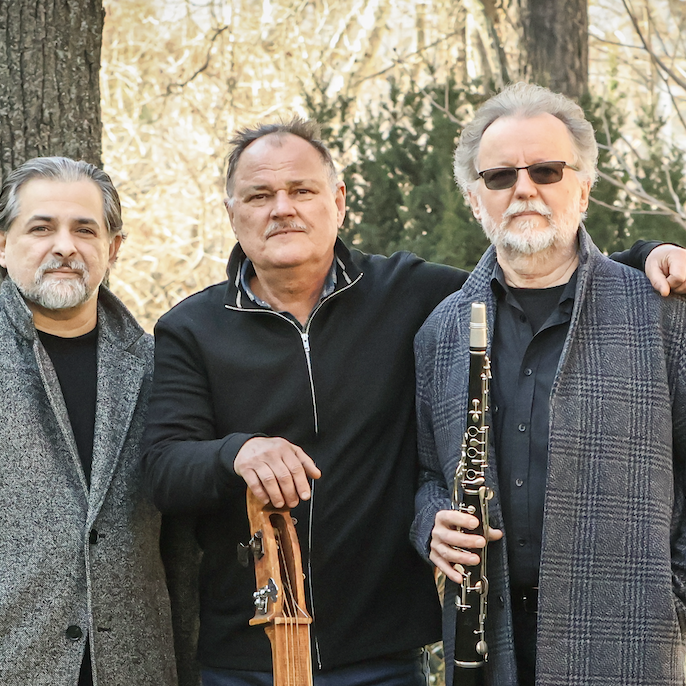
This program explores possible connections between classical music and folk music, featuring folk melodies collected by Bartók and Kodály alongside works by Bartók and Kodály themselves. The aim of this educational program is to present different approaches to interpreting musical traditions: from compositions based on folk music collections to stylistic explorations branching in various directions, with a true highlight being the performance of Bach on cimbalom and tárogató. During the concert, the musicians will also introduce traditional Hungarian instruments (hungarikums), including the cimbalom, as well as wind instruments such as the tilinkó, fujara, clarinet, and tárogató, and percussion instruments like the ütőgardon and the tapan. The Batyu–Fecske duo will present dances based on Bartók’s folk music collections.
Performers in the program:
Miklós Lukács, Erkel Ferenc Prize and Liszt Ferenc Prize-winning cimbalom artist, member of the Széchenyi Academy of Literature and Arts (Széchenyi Irodalmi és Művészeti Akadémia). Contemporary music, jazz, and various folk traditions coexist in perfect symbiosis in his art.
Mihály Borbély, Liszt Ferenc Prize-winning musician and member of the Kossuth Prize-winning Vujicsics Ensemble (Vujicsics Együttes). A wind instrumentalist and multi-instrumentalist, he appears as a soloist in authentic folk, jazz, and contemporary music productions alike, while his compositions are performed by renowned chamber groups and symphony orchestras.
Zoltán Farkas “Batyu”, Harangozó Gyula Prize-winning folk dancer and musician, Artist of Merit of Hungary (Magyarország Kiváló Művésze), who alongside his work as a dance teacher and choreographer also performs as a musician in several formations (ütőgardon, tapan).
Ildikó Tóth “Fecske”, folk dancer. She has toured the world with the Muzsikás Ensemble (Muzsikás Együttes) as Batyu’s dance partner.
Ticket prices: advance 2500 HUF, on the day of the event 3000 HUF
The realization of the program is supported by the National Cultural Fund (Nemzeti Kulturális Alap) and the Budapest Circus Arts and Contemporary Dance College (Budapest Cirkuszművészeti és Kortárstánc Főiskola).